


 Piergiorgio Venuti
Datacenter in Italia
Datacenter in Italia (Milano/Reggio Emilia)
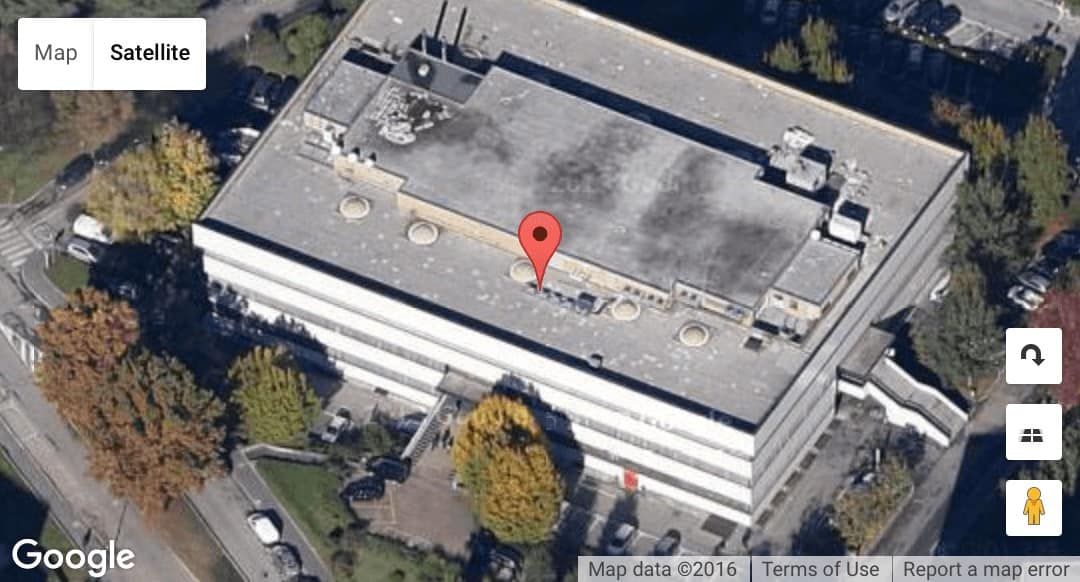
Il Datacenter in Italia della Cyberfero risiedere in via Caldera 21 a Milano presso il MIX (Milan Internet eXchange).
Il nostro Datacenter è un Tier 3 con le seguenti caratteristiche tecniche:
Sicurezza fisica:
Il servizio che acquisti include elementi strutturali e procedure per prevenire/dissuadere l’accesso fisico di personale non autorizzato al Datacenter. Specificatamente la sicurezza fisica è realizzata tramite:
- sistemi elettronici per il controllo degli accessi;
- personale di sorveglianza, 24 ore al giorno per 365 giorni l’anno;
- telecamere all’interno del Datacenter;
- personale on-site, tra i cui compiti è incluso il controllo delle attività del Cliente;
- procedure d’accesso ben definite;
- controllo di materiale e bagagli in entrata e uscita al Datacenter;
Condizionamento HVAC:
Il servizio che acquisti include l’uso del sistema di riscaldamento, ventilazione e condizionamento del Datacenter. La temperatura e l’umidità all’interno delle sale dedicate al servizio sono rigidamente controllate per assicurare condizioni stabili alle apparecchiature installate, secondo i seguenti parametri:
- Potenza: 1000W/m2
- Temperatura: tra 20 e 25 gradi centigradi
- Umidità: tra 40% e 60%
Prevenzione incendi:
Il servizio che acquisti include la fruizione del sistema di protezione/soppressione incendi interno al Datacenter, costituito pertanto da elementi passivi e da elementi attivi.
- Elementi passivi. Sono localizzati in aree e parti dell’edificio dove richiesto dalle norme costruttive vigenti.
- Elementi attivi. Consistono in un sistema elettronico di rilevamento situato all’interno dei pavimenti e/o nei contro-soffitti. Il sistema è realizzato in conformità alle norme vigenti.
- Sistema di soppressione incendi. Il sistema è realizzato tramite un sistema di soppressione a gas, basato principalmente su FM 200 o Inert55 (miscela di azoto e Argon), o altro componente a norma di legge.
Pavimento a canaline:
Le sale dati sono dotate di pavimento flottante con le seguenti caratteristiche:
Capacità di carico: 1.200 Kg/m2
Altezza minima: 50 cm
Cablaggi apparecchiature: canaline “aeree”
Controlli ambientali:
Il servizio che acquisti include la fruizione dei seguenti controlli ambientali:
- Protezione da scariche elettriche – Presente
- Protezione da fulmini – Il complesso di via Caldera è dotato di sistemi per la protezione da fulmini situati sul tetto di ciascun edificio.
- Filtri antipolvere/polline – Presenti
- Sistema anti allagamento: Presente
Sinteticamente il nostro Datacenter è stato costruito secondo le normi vigenti e possiede la certificazione ISO 27001.
Scopri il Cloud Server
[btnsx id=”2929″]
Condividi


RSS
Piu’ articoli…
- Da Cyberfero a Cyberfero: il rebranding dell’azienda leader nella cybersecurity
- NIS2 – Come il nuovo regolamento cyber potenzia la sicurezza dell’Europa
- Advanced persistent threat (APT): cosa sono e come difendersi
- Penetration Testing e MFA: Una Strategia Duplice per Massimizzare la Sicurezza
- SOAR e l’automazione della sicurezza informatica
- Penetration Testing: Dove Colpire per Proteggere la Tua Rete Informatica
- Ransomware: una piaga che mette in ginocchio aziende e istituzioni. Pagare o non pagare? Ecco la risposta.
- Perché l’audit IT e il log management sono importanti per la Cybersecurity
Categorie …
- Backup as a Service (25)
- Acronis Cloud Backup (18)
- Veeam Cloud Connect (3)
- Cloud CRM (1)
- Cloud Server/VPS (23)
- Conferenza Cloud (4)
- Cyberfero (15)
- Log Management (2)
- Monitoraggio ICT (4)
- Novita' (21)
- ownCloud (7)
- Privacy (8)
- Security (215)
- Cyber Threat Intelligence (CTI) (9)
- Deception (4)
- Ethical Phishing (10)
- Netwrix Auditor (2)
- Penetration Test (18)
- Posture Guard (4)
- SOCaaS (66)
- Vulnerabilita' (83)
- Web Hosting (16)
Tags
 Feed sconosciuto
Full Disclosure
- SEC Consult SA-20261104-0 :: Improper device certificate validation enables AiTM attacks in Siemens SICAM Toolbox II device communication Novembre 5, 2026Posted by SEC Consult Vulnerability Lab via Fulldisclosure on Nov 04SEC Consult Vulnerability Lab Security Advisory < 20261104-0 > ======================================================================= title: Improper device certificate validation enables AiTM attacks product: Siemens SICAM Toolbox II device communication vulnerable version:
- Apache Struts2 Tiles Plugin <=7.4.0 and >=6.3.0 Preparer Cache Vulnerabilities Novembre 5, 2026Posted by Daniel Owens via Fulldisclosure on Nov 04The Apache Struts2 Tiles plugin version =6.3.0) codebase includes a `ViewPreparer` construct, replete with multiple ViewPreparer factories, that contains several important vulnerabilities including unsynchronised, unbounded caches. The lack of proper synchronisation means that certain factories will create caches that race, risking lost cache entries, corrupted internal bucket […]
- unixODBC <=2.3.14 Rude Truncation via Narrowing Conversion Causes Out-of-Bounds `memcpy` Novembre 5, 2026Posted by Daniel Owens via Fulldisclosure on Nov 04unixODBC versions
- unixODBC <=2.3.14 Multiple Races Novembre 5, 2026Posted by Daniel Owens via Fulldisclosure on Nov 04The unixODBC driver manager library contains multiple races of importance / interest, including a set of data races in the connection-pooling configuration state data that can cause one thread to read a half-written pool-size or timeout value, which can lead to a variety of harmful effects, as […]
- unixODBC <=2.3.14 Multiple Heap Buffer Overflows, Underflows, and Over-Reads Novembre 5, 2026Posted by Daniel Owens via Fulldisclosure on Nov 04unixODBC versions 2.3.14 and below contain multiple heap buffer overflows, underflows, and over-reads. Attackers who can influence various arguments passed thereto can trigger the heap-based buffer overflows inside of the unixODBC driver manager itself, potentially corrupting the shared heap state across connections, crash the driver manager (thereby […]
- Apache Struts2 Core Arbitrary Code Execution via OGNL Sandbox Escape Novembre 2, 2026Posted by Daniel Owens via Fulldisclosure on Nov 01Description Apache Struts2 Core version 7.4.0 and below attempt to prevent arbitrary code execution via Object-Graph Navigation Language (OGNL) through several different mechanisms but only in a cursory fashion -- the libraries only guard against immediate calls evaluated by the OGNL engine via `SecurityMemberAccess`, but an allowed […]
- Apache Struts2 Core TokenHelper Token Cryptographic Timing Side-Channel Novembre 2, 2026Posted by Daniel Owens via Fulldisclosure on Nov 01Description The Apache Struts2 Core 7.4.0 and below performs session token comparisons cryptographically insecure early-exit comparison functions (e.g., `!=`, `memcmp`, byte-by-byte loops with `break`) that return as soon as the first mismatched byte is encountered. The execution time of the comparison is therefore proportional to the number […]
- Apache Struts2 Spring Plugin Uses a Previously Closed Resource Novembre 2, 2026Posted by Daniel Owens via Fulldisclosure on Nov 01Description The Apache Struts2 Spring Plugin opens a Spring `ApplicationContex` via a try-with-resources block and, outside of said block, then continues to use the closed resource, resulting in an uncaught `IllegalStateException`. This particular issue prevents proper functionality and indicates poor code quality and code review standards and […]
- Apache Struts2 Core Integer Overflow Novembre 2, 2026Posted by Daniel Owens via Fulldisclosure on Nov 01Description Apache Struts2 Core version 7.4.0 and below fails to properly prevent integer overflows, causing wrap-arounds and other issues on a downstream forced casting into types smaller than `BigInteger`. Importantly, this finding underscores why all applications using Struts and other such platforms should perform their own input […]
- Apache Struts2 Core Cross-Origin Protection Exemption Miskeyed to a Deployment-Wide Path Novembre 2, 2026Posted by Daniel Owens via Fulldisclosure on Nov 01Description Apache Struts2 Core version 7.4.0 and below's `FetchMetadataInterceptor`, `CoepInterceptor`, and `CoopInterceptor` each compare their `exemptedPaths` configuration -- a per-interceptor-reference, administrator-supplied set of paths intended to exempt specific actions from the corresponding cross-origin protection -- against `HttpServletRequest.getContextPath()`. `getContextPath()` is fixed for the entire deployed web...
Customers






Twitter FEED
Recent activity
-
SecureOnlineDesktop
Estimated reading time: 6 minutes L'impatto crescente delle minacce informatiche, su sistemi operativi privati op… https://t.co/FimxTS4o9G
-
SecureOnlineDesktop
Estimated reading time: 6 minutes The growing impact of cyber threats, on private or corporate operating systems… https://t.co/y6G6RYA9n1
-
SecureOnlineDesktop
Tempo di lettura stimato: 6 minuti Today we are talking about the CTI update of our services. Data security is… https://t.co/YAZkn7iFqa
-
SecureOnlineDesktop
Estimated reading time: 6 minutes Il tema della sicurezza delle informazioni è di grande attualità in questo peri… https://t.co/tfve5Kzr09
-
SecureOnlineDesktop
Estimated reading time: 6 minutes The issue of information security is very topical in this historical period ch… https://t.co/TP8gvdRcrF
Newsletter
Prodotti e Soluzioni
Collaborazioni
Modelli Cloud
News
- Da Cyberfero a Cyberfero: il rebranding dell’azienda leader nella cybersecurity Maggio 6, 2024
- NIS2 – Come il nuovo regolamento cyber potenzia la sicurezza dell’Europa Aprile 22, 2024
- Advanced persistent threat (APT): cosa sono e come difendersi Aprile 17, 2024
- Penetration Testing e MFA: Una Strategia Duplice per Massimizzare la Sicurezza Aprile 15, 2024
- SOAR e l’automazione della sicurezza informatica Marzo 27, 2024
Recensioni Google








Ottima azienda, servizi molto utili, staff qualificato e competente. Raccomandata!leggi di più
Ottimo supportoleggi di più
E'... un piacere poter collaborare con realtà di questo tipoleggi di più
Un ottimo fornitore.
Io personalmente ho parlato con l' Ing. Venuti, valore aggiunto indubbiamente.leggi di più


Contatti
© 2024 Cyberfero s.r.l. All Rights Reserved. Sede Legale: via Statuto 3 - 42121 Reggio Emilia (RE) – PEC [email protected] Cod. fiscale e P.IVA 03058120357 – R.E.A. 356650 Informativa Privacy - Certificazioni ISO