


 Piergiorgio Venuti
Certificati Let’s Encrypt gratuiti per tutti gli utenti Webhosting
Let’s Encrypt è una Certification Authority gratuita, automatizzata e open. L’obiettivo di Let’s Encrypt e del protocollo ACME è quello di rendere possibile la realizzazione di un server HTTPS e di ottenere automaticamente un certificato attendibile per i browser senza nessun intervento umano. Questo viene realizzato grazie all’esecuzione di un agent di gestione dei certificati installato sul web server.
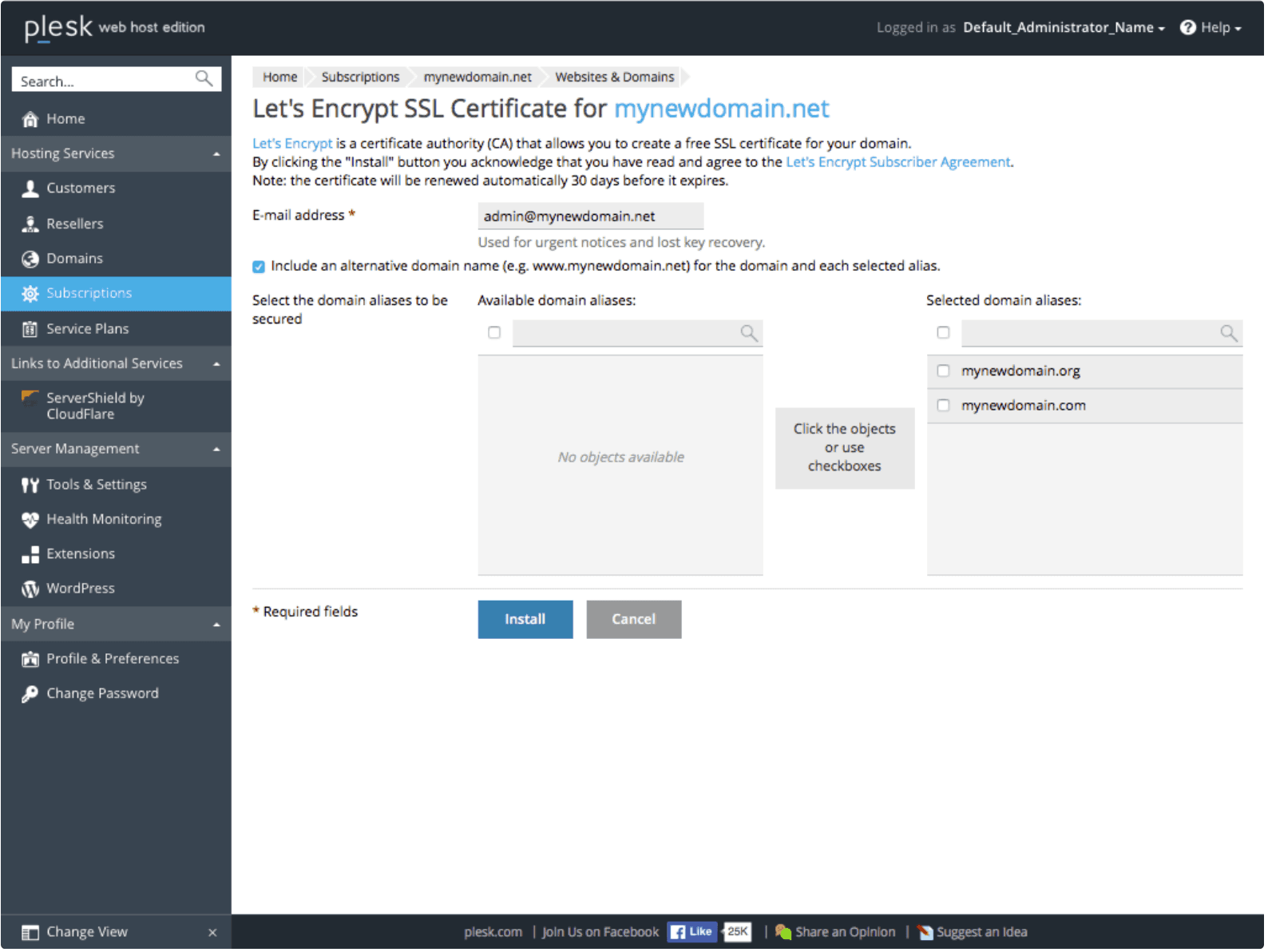
Con il nostro server Webhosting basato sulla tecnologia Plesk puoi ottenere un certificato SSL gratis con Let’s Encrypt in modo da rendere sicure tutte le tue pagine web.
Il Let’s Encrypt Plesk plugin è installato di default su tutti gli account web hosting, ti è sufficiente abilitarlo se desideri utilizzare un certificato SSL per proteggere il tuo sito web.
Creare Certificati SSL con Let’s Encrypt
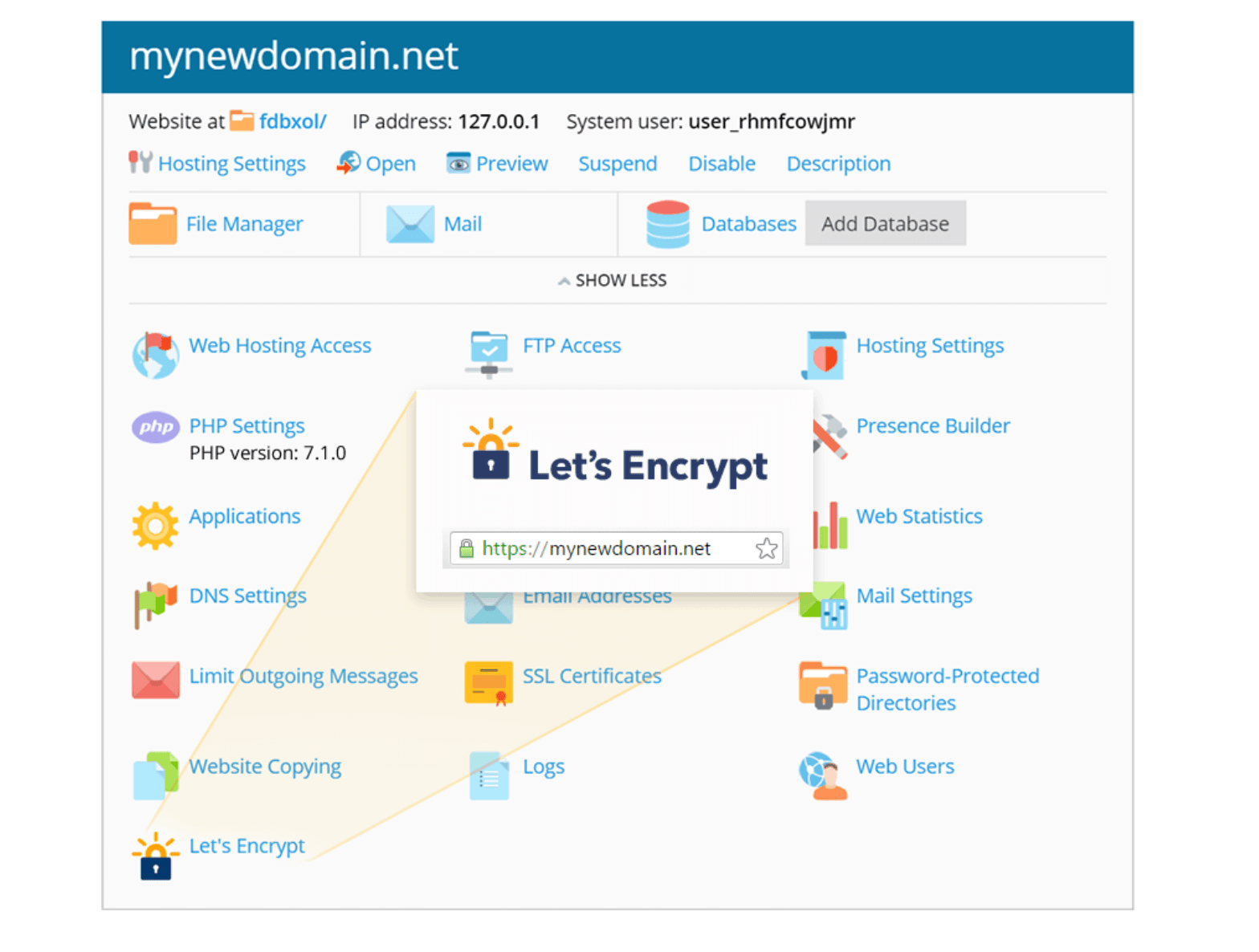
Per creare il tuo certificato SSL effettua l’accesso al tuo portale Webhosting, clicca sul dominio per il quale desideri creare il certificato SSl poi clicca sull’icona relativa come mostrato di seguito:

Se non hai ancora attivato il servizio Webhosting può accedere all’area demo Webgosting demo.
Screenshots

Condividi


RSS
Piu’ articoli…
- Da Cyberfero a Cyberfero: il rebranding dell’azienda leader nella cybersecurity
- NIS2 – Come il nuovo regolamento cyber potenzia la sicurezza dell’Europa
- Advanced persistent threat (APT): cosa sono e come difendersi
- Penetration Testing e MFA: Una Strategia Duplice per Massimizzare la Sicurezza
- SOAR e l’automazione della sicurezza informatica
- Penetration Testing: Dove Colpire per Proteggere la Tua Rete Informatica
- Ransomware: una piaga che mette in ginocchio aziende e istituzioni. Pagare o non pagare? Ecco la risposta.
- Perché l’audit IT e il log management sono importanti per la Cybersecurity
Categorie …
- Backup as a Service (25)
- Acronis Cloud Backup (18)
- Veeam Cloud Connect (3)
- Cloud CRM (1)
- Cloud Server/VPS (23)
- Conferenza Cloud (4)
- Cyberfero (15)
- Log Management (2)
- Monitoraggio ICT (4)
- Novita' (21)
- ownCloud (7)
- Privacy (8)
- Security (215)
- Cyber Threat Intelligence (CTI) (9)
- Deception (4)
- Ethical Phishing (10)
- Netwrix Auditor (2)
- Penetration Test (18)
- Posture Guard (4)
- SOCaaS (66)
- Vulnerabilita' (83)
- Web Hosting (16)
Tags
 Feed sconosciuto
Feed sconosciuto
Full Disclosure
- [0day-rubbish] Royal Server 5.04.50529.0 Local privilege escalation to LocalSystem on the execution path without credential override (7.2) 8 Settembre 2026Posted by disclosure via Fulldisclosure on Sep 08TO: fulldisclosure () seclists org SUBJECT: [0day-rubbish] Royal Server 5.04.50529.0 Local privilege escalation to LocalSystem on the execution path without credential override (7.2) FROM: disclosure () 0day-rubbish com ----BODY---- 0day Rubbish Research Team is publicly disclosing a vulnerability in Royal Server 5.04.50529.0. Type: Local privilege escalation to LocalSystem […]
- [0day-rubbish] core-admin 1.0.164 (build 16468) Systemic shell command injection via ineffective quote escaping (8.8) 8 Settembre 2026Posted by disclosure via Fulldisclosure on Sep 08TO: fulldisclosure () seclists org SUBJECT: [0day-rubbish] core-admin 1.0.164 (build 16468) Systemic shell command injection via ineffective quote escaping (8.8) FROM: disclosure () 0day-rubbish com ----BODY---- 0day Rubbish Research Team is publicly disclosing a vulnerability in core-admin 1.0.164 (build 16468). Type: Systemic shell command injection via ineffective quote […]
- [0day-rubbish] OP5 Monitor 9.20 Command injection surviving the CVE-2025-34115 patch (OPT-IN fix ineffective) (8.8) 8 Settembre 2026Posted by disclosure via Fulldisclosure on Sep 08TO: fulldisclosure () seclists org SUBJECT: [0day-rubbish] OP5 Monitor 9.20 Command injection surviving the CVE-2025-34115 patch (OPT-IN fix ineffective) (8.8) FROM: disclosure () 0day-rubbish com ----BODY---- 0day Rubbish Research Team is publicly disclosing a vulnerability in OP5 Monitor 9.20. Type: Command injection surviving the CVE-2025-34115 patch (OPT-IN fix […]
- [0day-rubbish] QuantaStor 6.8.3.018 Command injection in the alert-mail command via the smtpPassword field (8.8) 8 Settembre 2026Posted by disclosure via Fulldisclosure on Sep 08TO: fulldisclosure () seclists org SUBJECT: [0day-rubbish] QuantaStor 6.8.3.018 Command injection in the alert-mail command via the smtpPassword field (8.8) FROM: disclosure () 0day-rubbish com ----BODY---- 0day Rubbish Research Team is publicly disclosing a vulnerability in QuantaStor 6.8.3.018. Type: Command injection in the alert-mail command via the smtpPassword […]
- [0day-rubbish] SmarterMail 100.0.9693 (Build 9693) Antivirus command-line configuration executing as NT AUTHORITY\SYSTEM (7.2) 8 Settembre 2026Posted by disclosure via Fulldisclosure on Sep 08TO: fulldisclosure () seclists org SUBJECT: [0day-rubbish] SmarterMail 100.0.9693 (Build 9693) Antivirus command-line configuration executing as NT AUTHORITY\SYSTEM (7.2) FROM: disclosure () 0day-rubbish com ----BODY---- 0day Rubbish Research Team is publicly disclosing a vulnerability in SmarterMail 100.0.9693 (Build 9693). Type: Antivirus command-line configuration executing as NT AUTHORITY\SYSTEM (CWE-250) […]
- [0day-rubbish] Jitterbit Agent 12.8.1.6 (Docker jitterbit/agent:12.8.1.6) Unauthenticated SOAP with hard-coded credentials leading to OS command execution (9.8) 8 Settembre 2026Posted by disclosure via Fulldisclosure on Sep 08TO: fulldisclosure () seclists org SUBJECT: [0day-rubbish] Jitterbit Agent 12.8.1.6 (Docker jitterbit/agent:12.8.1.6) Unauthenticated SOAP with hard-coded credentials leading to OS command execution (9.8) FROM: disclosure () 0day-rubbish com ----BODY---- 0day Rubbish Research Team is publicly disclosing a vulnerability in Jitterbit Agent 12.8.1.6 (Docker jitterbit/agent:12.8.1.6). Type: Unauthenticated SOAP with […]
- [0day-rubbish] Accurate Online Private Cloud on-prem (current) Unauthenticated Hessian deserialization leading to JNDI remote class loading (9.8) 8 Settembre 2026Posted by disclosure via Fulldisclosure on Sep 08TO: fulldisclosure () seclists org SUBJECT: [0day-rubbish] Accurate Online Private Cloud on-prem (current) Unauthenticated Hessian deserialization leading to JNDI remote class loading (9.8) FROM: disclosure () 0day-rubbish com ----BODY---- 0day Rubbish Research Team is publicly disclosing a vulnerability in Accurate Online Private Cloud on-prem (current). Type: Unauthenticated Hessian […]
- [0day-rubbish] DBxtra .NET 13.1.1.0 Unauthenticated SOAP API to xp_cmdshell code execution (9.8) 8 Settembre 2026Posted by disclosure via Fulldisclosure on Sep 08TO: fulldisclosure () seclists org SUBJECT: [0day-rubbish] DBxtra .NET 13.1.1.0 Unauthenticated SOAP API to xp_cmdshell code execution (9.8) FROM: disclosure () 0day-rubbish com ----BODY---- 0day Rubbish Research Team is publicly disclosing a vulnerability in DBxtra .NET 13.1.1.0. Type: Unauthenticated SOAP API to xp_cmdshell code execution (CWE-306) CVSS: 9.8 […]
- **Subject:** CVE-2026-2035703: Tozed ZLT X300 5G CPE — Unauthenticated Remote Root Code Execution via TR-069 Command Injection (CVSS 9.8) 8 Settembre 2026Posted by Surf free on Sep 08Tozed ZLT X300 5G CPE Router firmware 6.01.3 contains an OS command injection vulnerability (CWE-78) in the TR-069/CWMP client daemon (netcwmpd). The IPPingDiagnostics Host parameter is passed unsanitized into sprintf, which constructs a shell command executed via system_by_root() as root. An attacker operating a rogue LTE base station using […]
- CVE-2026-52307: Stored XSS in 1CMS v5.6 8 Settembre 2026Posted by 懒-癌-症~ via Fulldisclosure on Sep 08CVE-2026-52307: 1CMS v5.6 Authenticated Stored XSS Vulnerability Vulnerability Description An authenticated stored cross-site scripting (XSS) vulnerability exists in the Column Management component of ClassCMS 1CMS v5.6. Attackers can execute arbitrary web scripts or HTML by injecting a crafted payload into the title field. - Vulnerability Type: Cross Site […]
Customers






Twitter FEED
Recent activity
-
SecureOnlineDesktop
Estimated reading time: 6 minutes L'impatto crescente delle minacce informatiche, su sistemi operativi privati op… https://t.co/FimxTS4o9G
-
SecureOnlineDesktop
Estimated reading time: 6 minutes The growing impact of cyber threats, on private or corporate operating systems… https://t.co/y6G6RYA9n1
-
SecureOnlineDesktop
Tempo di lettura stimato: 6 minuti Today we are talking about the CTI update of our services. Data security is… https://t.co/YAZkn7iFqa
-
SecureOnlineDesktop
Estimated reading time: 6 minutes Il tema della sicurezza delle informazioni è di grande attualità in questo peri… https://t.co/tfve5Kzr09
-
SecureOnlineDesktop
Estimated reading time: 6 minutes The issue of information security is very topical in this historical period ch… https://t.co/TP8gvdRcrF
Newsletter
Prodotti e Soluzioni
Collaborazioni
Modelli Cloud
News
- Da Cyberfero a Cyberfero: il rebranding dell’azienda leader nella cybersecurity 6 Maggio 2024
- NIS2 – Come il nuovo regolamento cyber potenzia la sicurezza dell’Europa 22 Aprile 2024
- Advanced persistent threat (APT): cosa sono e come difendersi 17 Aprile 2024
- Penetration Testing e MFA: Una Strategia Duplice per Massimizzare la Sicurezza 15 Aprile 2024
- SOAR e l’automazione della sicurezza informatica 27 Marzo 2024
Recensioni Google


Davvero consigliata !!!!!
In particolare vorrei sottolineare la figura che piu’ racchiude e sintetizza le qualità della Secure Online Desktop , il suo AD Ing. Piergiorgio Venuti, professionista impagabile , sia dal punto di vista tecnico/organizzativo che soprattutto (e non dimeno) come persona , capace di gestire , risolvere e approcciare qualsivoglia attività/problematica, davvero un grande !!!!







Tempi veloci e staff preparato!
Ottima azienda, servizi molto utili, staff qualificato e competente. Raccomandata!leggi di più
Ottimo supportoleggi di più
E' un piacere poter collaborare con realtà di questo tipoleggi di più
Un ottimo fornitore.
Io personalmente ho parlato con l' Ing. Venuti, valore aggiunto indubbiamente.leggi di più


Contatti
© 2024 Cyberfero s.r.l. All Rights Reserved. Sede Legale: via Statuto 3 - 42121 Reggio Emilia (RE) – PEC [email protected] Cod. fiscale e P.IVA 03058120357 – R.E.A. 356650 Informativa Privacy - Certificazioni ISO