




 Piergiorgio Venuti
Data Loss Prevention: definition and uses
Estimated reading time: 7 minutes
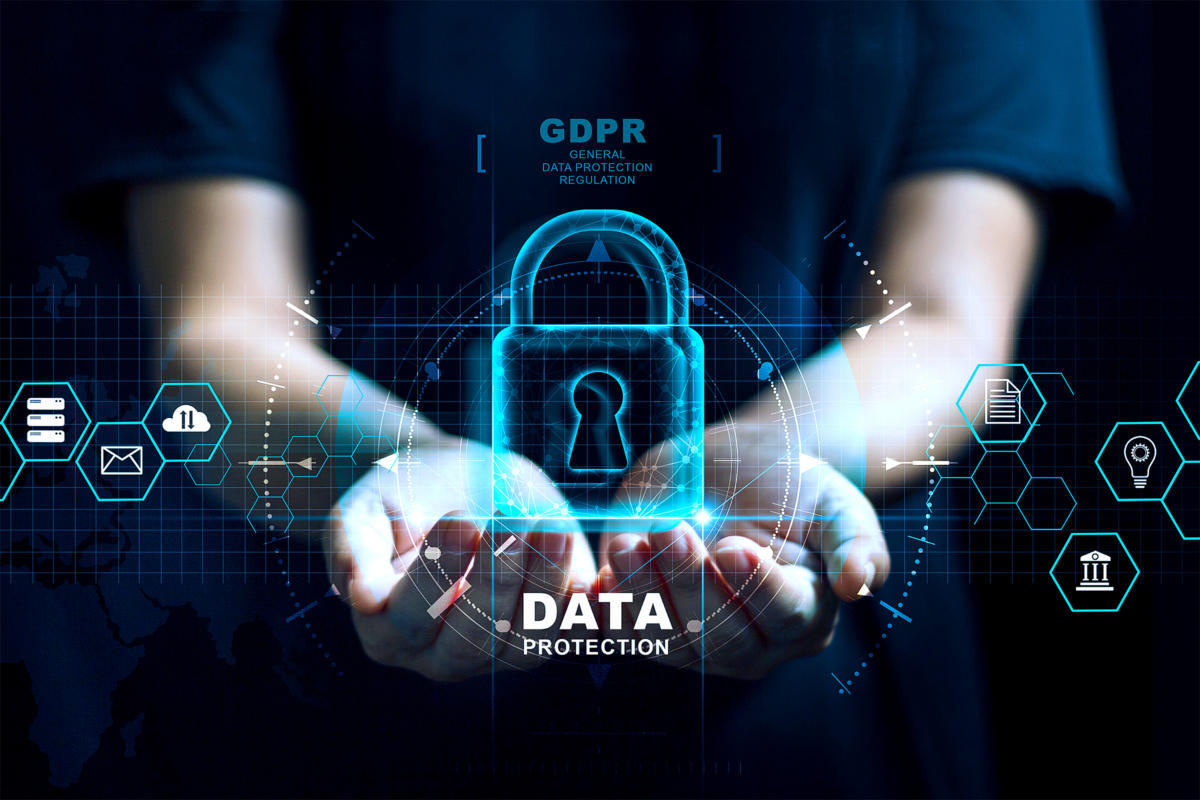
Data loss prevention (DLP) is a set of tools and processes used to ensure that sensitive data is not lost, misused or accessed by unauthorized users. DLP software classifies regulated, confidential and business-critical data and identifies violations of policies defined by organizations or within a predefined policy package. Default policies are typically dictated by regulatory compliances such as HIPAA, PCI-DSS, or GDPR.
Once these possible violations are identified, the DLP applies “remediation” with alerts, encryption, and other protective actions. The goal is simple: prevent end users from accidentally or maliciously sharing data that could put the business at risk.
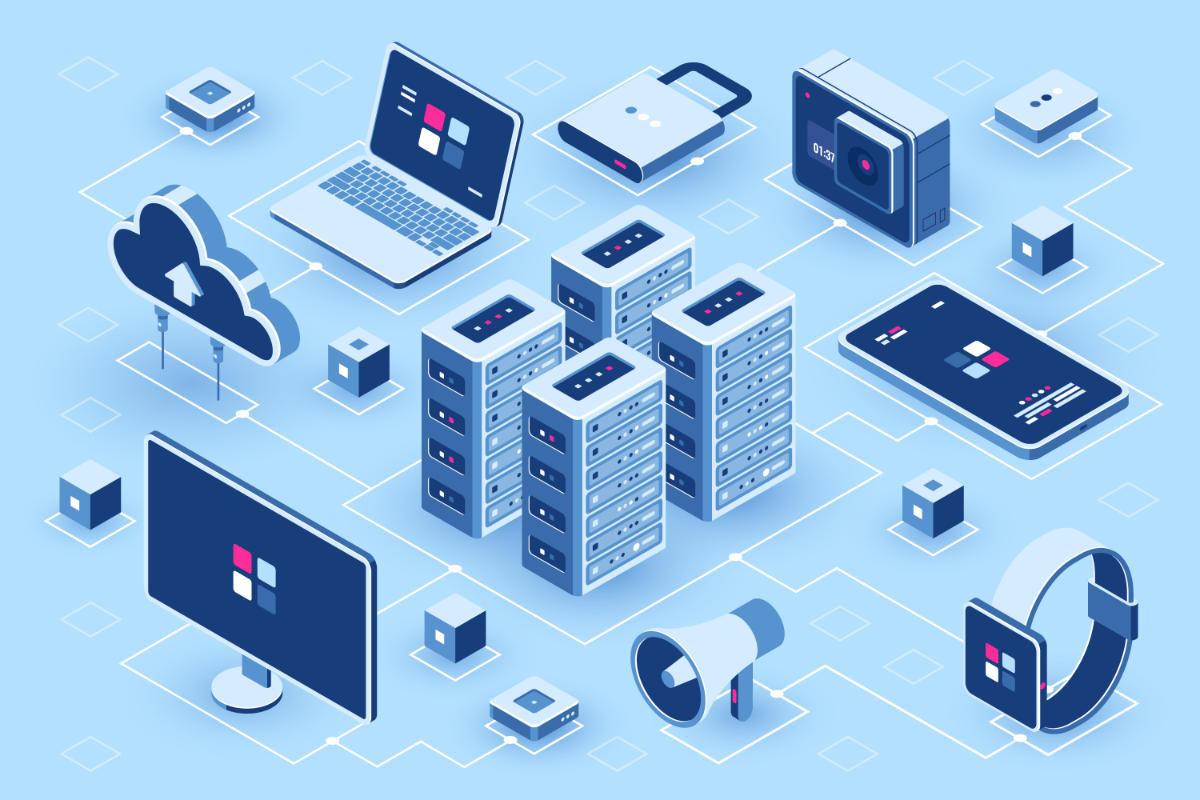
Data loss prevention software and tools monitor and control endpoint activity, filter data flows across corporate networks, and monitor data in the cloud to protect data at rest, in motion, and in use. DLP also provides reports to meet compliance and auditing requirements. A very useful tool also for identifying areas of weakness and anomalies for incident response.
Is it necessary to use DLP tools?
Data loss prevention addresses three main objectives that are common pain points for many organizations: personal information protection/compliance, intellectual property protection, and data visibility.
Personal Information Protection / Compliance
Does your company collect and store personally identifiable information (PII), protected health information (PHI), or payment card information (PCI)? If so, you are more than likely subject to compliance regulations, such as HIPAA (for PHI) and GDPR (for personal data of EU residents), that require you to protect your customers’ sensitive data.
Data loss prevention can identify, classify and label sensitive data and monitor activities and events surrounding that data. Additionally, reporting capabilities provide the details needed for compliance audits.
Intellectual property (IP) protection
Does the company hold important intellectual property and trade or state secrets that could jeopardize the financial health and/or image of your brand in the event of loss or theft? A DLP solution can classify intellectual property in both structured and unstructured forms.
With policies and controls in place, you can protect against unwanted exfiltration of this data.
Data visibility
Is the company looking to gain additional visibility into data movement? A comprehensive enterprise DLP solution can help you see and track your data across endpoints, networks and clouds. This will provide visibility into how individual users within your organization interact with data. As we have seen other times when talking about social engineering, knowing how users behave is very useful. It is used to draw a basic profile and monitor that there are no anomalies that could indicate compromise of the account.
The ones listed above are main use cases. But DLP can address a variety of other pain points including insider threats, user and entity behavior analytics, and advanced threats.
Why adopt data loss prevention?
In the 2017 Gartner Magic Quadrant for Enterprise DLP, the total data loss prevention market was estimated to reach $1.3 billion in 2020. The size was approximately $2.64 billion. The DLP market is not new, but it has evolved to include managed services, cloud capabilities, and advanced threat protection, among other things.
This, combined with the increasing trend of major corporate breaches, has skyrocketed the adoption of DLP as a means to protect sensitive data. Here are nine trends that are driving DLP adoption.
Growth of CISOs
More and more companies are hiring Chief Information Security Officers (CISOs) who report to the CEO. The latter want to know the strategic plan for preventing data leaks. Data loss prevention tools provide clear value in this regard and give CISOs the reporting capabilities needed to provide regular updates.
Evolution of compliance requests
Global data protection regulations are constantly changing and every organization must be adaptable and prepared. In recent years, EU legislators have approved the GDPR. In the USA a similar event occurred when the State of New York adopted the NYDFS Cybersecurity Regulation. These new regulations have both tightened data protection requirements. DLP solutions allow organizations the flexibility to evolve with changing global regulations.
Increase in “places” where data is kept
The increased use of the cloud, complicated supply chain networks and other services over which you no longer have full control has made data protection more complex. Visibility into events and context surrounding data before it leaves your organization is important to prevent your sensitive data from falling into the wrong hands.
Frequency of data breaches
Nation-state adversaries, cybercriminals, and malicious insiders target your sensitive data for a variety of reasons, such as corporate espionage, personal financial gain, and political advantage. Data loss prevention can protect against all types of adversaries, malicious or otherwise.
In recent years, there have been thousands of data breaches and many other security incidents. Billions of records have been lost in giant data breaches such as: the database misconfiguration that leaked nearly 200 million US voter records in 2015, the Equifax data breach that continued to grow, and the Yahoo breach which affected 3 billion users. These are just a few of the many headlines that highlight the need to protect your organization’s data.
The value of the data is very high
Stolen data is often sold on the Dark Web, where individuals and criminal groups can purchase it and use it for their own benefit. With some types of data selling for up to thousands of dollars, there is a clear financial incentive for data theft.
There is more data to steal
The definition of what is sensitive data has expanded over the years. Sensitive data now includes intangible assets, such as pricing models and business methodologies. From 1975 to 2015, the amount of intangible assets grew from 17% to 84% of market value, according to a study by Ocean Tomo. These assets also reached a record $21 trillion in 2018. This means that your company has a lot more data to protect and using data loss prevention could only help in this regard.
There is a shortage of specialized personnel
The security talent shortage isn’t going away anytime soon, and there has likely already been an impact on your business. In fact, in a 2017 ESG and ISSA survey, 43% of respondents said their organizations were affected by a lack of skilled staff. The shortage is worsening with 3.5 million unfilled security positions expected by the end of 2021. Managed data loss prevention services act as remote extensions of your team to fill this staffing gap.
Adopt a SIEM to implement DLP
Ormai il prodotto di più alto valore di un’azienda sono i dati che gestisce. Il rischio di data exfiltration e conseguente perdita economica e d’immagine è dietro l’angolo. È facile a dirsi che basta proteggere i propri dati, la realtà è che diventa ogni giorno più complicato.
Nowadays, a company’s highest value product is the data it manages. The risk of data exfiltration and consequent economic and image loss is just around the corner. It’s easy to say that protecting your data is enough, the reality is that it becomes more complicated every day.
The places where data are used and stored, as well as the methods of access and consultation, are increasing. Technology, in general, makes our lives easier while at the same time exposing our data. Corporate infrastructures are no exception, indeed, precisely due to the highly valuable nature of the data collected, they are subject to greater risk.
The adoption of an adequate security system is essential and there are many solutions available. We at SOD, speaking of data loss prevention, recommend adopting a SIEM that includes the tools necessary to implement DLP techniques. For even better protection and more granular control of user data, SOC as a Service also provides behavioral analysis performed by an artificial intelligence system (UEBA).
To find out how these services can help your company protect your data and infrastructure, do not hesitate to contact us, we will be happy to answer any questions.
Useful links:
Machine learning and cybersecurity: UEBA applications and security
Avoid Ransomware: That’s why it’s best not to take any risks
Share


RSS
More Articles…
- From Cyberfero to Cyberfero: rebranding of the leading cybersecurity company
- NIS: what it is and how it protects cybersecurity
- Advanced persistent threats (APTs): what they are and how to defend yourself
- Penetration Testing and MFA: A Dual Strategy to Maximize Security
- Penetration Testing: Where to Strike to Protect Your IT Network
- Ransomware: a plague that brings companies and institutions to their knees. Should you pay the ransom? Here is the answer.
- Why IT audit and log management are important for Cybersecurity
- Red Team, Blue Team and Purple Team: what are the differences?
Categories …
- Backup as a Service (18)
- Acronis Cloud Backup (11)
- Veeam Cloud Connect (4)
- Cloud Conference (3)
- Cloud CRM (1)
- Cloud Server/VPS (22)
- Conferenza Cloud (4)
- Cyberfero (15)
- ICT Monitoring (5)
- Log Management (2)
- News (25)
- ownCloud (4)
- Privacy (7)
- Security (203)
- Cyber Threat Intelligence (CTI) (8)
- Deception (4)
- Ethical Phishing (11)
- Netwrix Auditor (2)
- Penetration Test (11)
- Posture Guard (3)
- SOCaaS (65)
- Vulnerabilities (84)
- Web Hosting (15)
Tags
 Unknown Feed
Full Disclosure
- Code Security Review tool September 22, 2026Posted by E. Kellinis on Sep 22Karma Pro is an open source code review tool that can assist code reviewers with a multitude of useful tools. Karma Pro is a macOS source-code security scanner (AST base and Heuristics) that statically analyses projects in multiple languages. It's backed by an ML classifier trained on real patches […]
- HP Advance / Output Central: unauthenticated SYSTEM RCE and two additional vulnerabilities (CVE-2026-89082/89083/89084) September 22, 2026Posted by Joe via Fulldisclosure on Sep 22HP Advance / HP Output Central Unauthenticated SYSTEM RCE, authorization bypass, and arbitrary file write/delete CVE-2026-89082, CVE-2026-89083, CVE-2026-89084 ================================================================ SUMMARY ================================================================ Vendor: HP Inc. Product family named by HP: HP Advance Products in HP's update table: HP AC Print & Scan; HP Output Central Components:...
- CFP No cON Name 2k26 - Palma, Mallorca - Spain September 22, 2026Posted by Jose Nicolas Castellano on Sep 22No cON Name 2026 - Palma, Mallorca - Balearic Islands ************************************ ***** Call For Papers ****** ************************************ https://www.noconname.org/call-for-papers/ Exact place not disclosed until a few weeks before due celebration. * INTRODUCTIONfulldisclosure () seclists org The organization has opened CFP proposals. No cON Name […]
- CVE-2026-17613: Penpot cross-team file takeover via import-binfile (unpatched in 2.17.2) September 22, 2026Posted by Louis Sanchez via Fulldisclosure on Sep 22Posting this as an update rather than a first disclosure. The advisory went public on 2026-08-04 with no vendor fix. Penpot has shipped two releases since then, 2.17.1 and 2.17.2 -- the latter 14 days ago, on 2026-08-27 -- and I re-checked the code this morning: the […]
- CVE-2026-44756: Pre-Auth RCE in SAP EPP Processing (ICM, Web Dispatcher, disp+work) September 22, 2026Posted by Raschin Tavakoli via Fulldisclosure on Sep 22nullFaktor Security Advisory < 2026-09-10 > =========================================================== Title: Pre-Authentication Remote Code Execution in SAP Extended Passport (EPP) processing library Affected Components: ICM, SAP Web Dispatcher, dialog work processes Vulnerability: Stack based Buffer Overflow CVE: CVE-2026-44756 Impact: Critical CVSS 4.0 Vector:...
- [0day-rubbish] TigerGraph Community Edition 4.2.4 Default credentials plus GSQL TO_CSV arbitrary file write to SSH code execution (9.8) September 22, 2026Posted by disclosure via Fulldisclosure on Sep 220day Rubbish Research Team is publicly disclosing a vulnerability in TigerGraph Community Edition 4.2.4. Type: Default credentials plus GSQL TO_CSV arbitrary file write to SSH code execution (CWE-798) CVSS: 9.8 (AV:N/AC:L/PR:N/UI:N/S:U/C:H/I:H/A:H) Impact: command execution as the tigergraph service user (uid 1001), which owns the engine, graph data, catalog […]
- [0day-rubbish] Teltonika RutOS 00.07.06.21 Authenticated ipsec.lua logread command injection with reflected output (8.8) September 22, 2026Posted by disclosure via Fulldisclosure on Sep 220day Rubbish Research Team is publicly disclosing a vulnerability in Teltonika RutOS 00.07.06.21. Type: Authenticated ipsec.lua logread command injection with reflected output (CWE-78) CVSS: 8.8 (AV:N/AC:L/PR:L/UI:N/S:U/C:H/I:H/A:H) Impact: root command execution on the router, with command output reflected into the JSON response Authentication: authenticated administrator Full technical analysis and […]
- APPLE-SA-09-14-2026-10 Xcode 27 September 22, 2026Posted by Apple Product Security via Fulldisclosure on Sep 22APPLE-SA-09-14-2026-10 Xcode 27 Xcode 27 addresses the following issues. Information about the security content is also available at https://support.apple.com/149040. Apple maintains a Security Releases page at https://support.apple.com/100100 which lists recent software updates with security advisories. Xcode IDE Available for: macOS Tahoe 26.6 and later Impact: An […]
- APPLE-SA-09-14-2026-9 Safari 27 September 22, 2026Posted by Apple Product Security via Fulldisclosure on Sep 22APPLE-SA-09-14-2026-9 Safari 27 Safari 27 addresses the following issues. Information about the security content is also available at https://support.apple.com/149039. Apple maintains a Security Releases page at https://support.apple.com/100100 which lists recent software updates with security advisories. Safari Available for: macOS Sequoia and macOS Tahoe Impact: A malicious […]
- APPLE-SA-09-14-2026-8 visionOS 27 September 22, 2026Posted by Apple Product Security via Fulldisclosure on Sep 22APPLE-SA-09-14-2026-8 visionOS 27 visionOS 27 addresses the following issues. Information about the security content is also available at https://support.apple.com/149038. Apple maintains a Security Releases page at https://support.apple.com/100100 which lists recent software updates with security advisories. Accelerate Framework Available for: Apple Vision Pro (all models) Impact: Processing […]
Customers






Twitter FEED
Recent activity
-
SecureOnlineDesktop
Estimated reading time: 6 minutes L'impatto crescente delle minacce informatiche, su sistemi operativi privati op… https://t.co/FimxTS4o9G
-
SecureOnlineDesktop
Estimated reading time: 6 minutes The growing impact of cyber threats, on private or corporate operating systems… https://t.co/y6G6RYA9n1
-
SecureOnlineDesktop
Tempo di lettura stimato: 6 minuti Today we are talking about the CTI update of our services. Data security is… https://t.co/YAZkn7iFqa
-
SecureOnlineDesktop
Estimated reading time: 6 minutes Il tema della sicurezza delle informazioni è di grande attualità in questo peri… https://t.co/tfve5Kzr09
-
SecureOnlineDesktop
Estimated reading time: 6 minutes The issue of information security is very topical in this historical period ch… https://t.co/TP8gvdRcrF
Newsletter
Products and Solutions
Partners
Cloud Models
News
- From Cyberfero to Cyberfero: rebranding of the leading cybersecurity company May 6, 2024
- NIS: what it is and how it protects cybersecurity April 22, 2024
- Advanced persistent threats (APTs): what they are and how to defend yourself April 17, 2024
- Penetration Testing and MFA: A Dual Strategy to Maximize Security April 15, 2024
- Penetration Testing: Where to Strike to Protect Your IT Network March 25, 2024
Google Reviews


Davvero consigliata !!!!!
In particolare vorrei sottolineare la figura che piu’ racchiude e sintetizza le qualità della Secure Online Desktop , il suo AD Ing. Piergiorgio Venuti, professionista impagabile , sia dal punto di vista tecnico/organizzativo che soprattutto (e non dimeno) come persona , capace di gestire , risolvere e approcciare qualsivoglia attività/problematica, davvero un grande !!!!







Tempi veloci e staff preparato!
Ottima azienda, servizi molto utili, staff qualificato e competente. Raccomandata!read more
Ottimo supportoread more
E' un piacere poter collaborare con realtà di questo tiporead more
Un ottimo fornitore.
Io personalmente ho parlato con l' Ing. Venuti, valore aggiunto indubbiamente.read more


About
© 2024 Cyberfero s.r.l. All Rights Reserved. Sede Legale: via Statuto 3 - 42121 Reggio Emilia (RE) – PEC [email protected] Cod. fiscale e P.IVA 03058120357 – R.E.A. 356650 Informativa Privacy - Certificazioni ISO