





 Piergiorgio Venuti
What is phishing? Understanding and identifying social engineering attacks
Estimated reading time: 7 minutes
Phishing is a type of social engineering attack often used to steal user data, including login credentials and credit card numbers . Occurs when an attacker, disguised as a trusted entity , tricks a victim into opening an email, instant message, or text message.
The recipient is then tricked into clicking on a malicious link, which can lead to malware installation , system freezing as part of an attack ransomware or the disclosure of sensitive information.
An attack can have devastating results . For individuals, this includes unauthorized purchases, fund theft or identity theft.

What is Phishing for Business?
Even more damaging, phishing is also used to gain an entry point into corporate or government networks as part of a larger attack , such as a persistent advanced threat event (APT – Advanced Persistent Threat). In the latter scenario, employees are compromised in order to bypass security perimeters , distribute malware within a closed environment, or gain privileged access to protected data.
An organization that succumbs to such an attack typically suffers severe financial losses, as well as a decline in market share, reputation and consumer confidence. Depending on the scope, a phishing attempt could escalate into a security incident that a company will have difficulty recovering from .
What a phishing attack looks like
Knowing what phishing is often isn’t enough to protect yourself . The best thing to do is work on resilience to attacks and understand how to spot them before falling victim to them.
As we mentioned earlier, the consequences can be enormous. But, if it seems simple to do when it comes to a single individual, what if there is an entire company to protect? Cyberfero offers a service geared towards just that : train entire companies to recognize and mitigate the risk of phishing attacks.
Through a first controlled attack, we are able to understand which are the points to work on . Subsequently, training proposals for employees are organized. They are taught how to recognize threats before they become problematic. To find out more, visit the service page .
But let’s see what a generic attack looks like.
Attack example
1. A bogus email ostensibly from myuniversita.edu is being distributed en masse to as many faculty members as possible.
2. The email claims that the user’s password is about to expire . Instructions are given to go to the myuniversita.edu/rinnovo link to renew their password within 24 hours.
Various things can happen by clicking on the proposed link.
– The user is redirected to myuniversita.edurinnovo.com , a fake page that looks exactly like the real renewal page, where both the new password are requested than the existing one. The attacker, monitoring the page, hijacks the original password to – gain access to secure areas of the university network.
– The user is sent to the real password renewal page. However, while being redirected, a malicious script runs in the background to hijack the user’s session cookie. This results in a Cross Site Scripting attack, giving the author privileged access to the university network.

Logic of an attack
Email phishing is a big game . An attacker who sends thousands of fraudulent messages can obtain significant information and sums of money, even if only a small percentage of recipients fall into the scam .
Hackers go to great lengths to design messages for a phishing attack by mimicking real emails from a disguised organization. Using the same phrasing, the same typefaces, the same logos and the same signatures, the messages appear legitimate .
Also, another thing to watch out for is that attackers usually try to push users into action by creating a sense of urgency. For example, as shown above, an email could threaten account expiration and put the recipient in urgency . Applying this pressure leads the user to be less diligent and more prone to error.
Finally, the links within the messages resemble their legitimate counterparts, but typically have a misspelled domain name or extra subdomains. In the above example, the URL myuniverist.edu/rinnovo has been changed to myuniversita.edurinnovo.com . The similarities between the two addresses give the impression of a secure connection , making the recipient less aware that an attack is in progress.
What is spear phishing
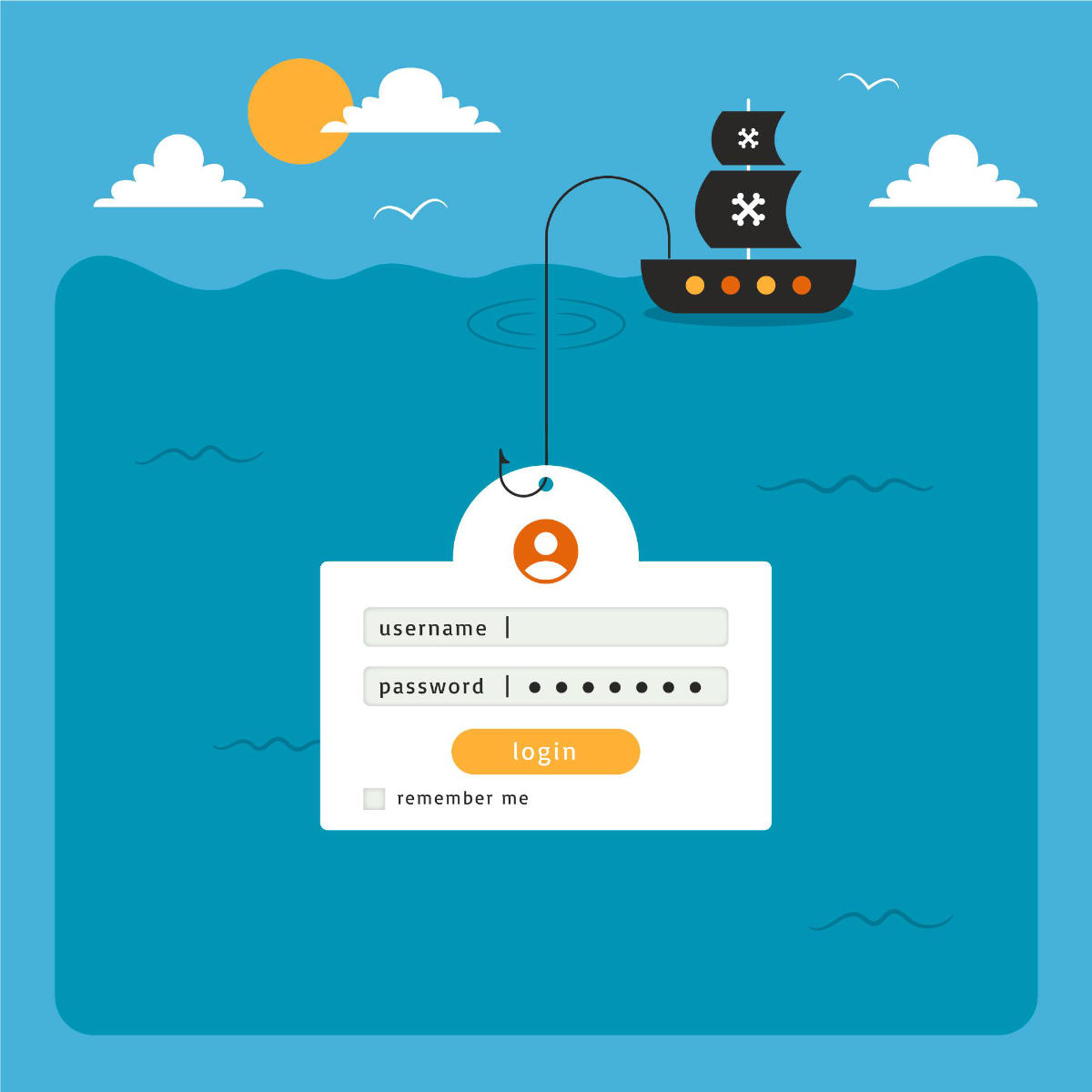
Spear phishing targets a specific person or company , as opposed to casual users. It’s a more in-depth version of phishing that requires special knowledge of an organization, including its power structure.
An attack could take place like this:
– A hacker searches for employee names within an organization’s marketing department and gains access to the latest project invoices.
– Posing as the director of marketing , The attacker sends an email to a project manager in the department using a subject that says: Updated invoice for Q3 campaigns . The included text, style, and logo duplicate the organization’s standard email template.
– A link in the email redirects to a password-protected internal document, which is actually a forged version of a stolen invoice .
– The marketing director is required to login to view the document. The attacker steals his credentials , gaining full access to sensitive areas within the organization’s network.
By providing the attacker with valid login credentials, spear phishing is an effective way to carry out the first phase of a ransomware attack.
What is whale phishing
whale phishing , or whaling , is a form of spear phishing that targets very big fish: CEOs or other high-value targets . Many of these scams target members of a company’s board of directors, who are considered particularly vulnerable. Indeed, they have great authority within the company, but because they are not full-time employees, they often use personal email addresses for business-related correspondence , which does not have the protections offered by email business.
whale phishing , or whaling , is a form of spear phishing that targets very big fish: CEOs or other high-value targets . Many of these scams target members of a company’s board of directors, who are considered particularly vulnerable. Indeed, they have great authority within the company, but because they are not full-time employees, they often use personal email addresses for business-related correspondence , which does not have the protections offered by email business.
How to defend yourself
Protecting against a phishing attack requires action by both users and businesses.
For users, vigilance is the key . A forged message often contains subtle errors that expose its true nature. These can include misspellings or changes to domain names , as seen in the example of the preceding URL. Users should be wondering why they are receiving a certain email .
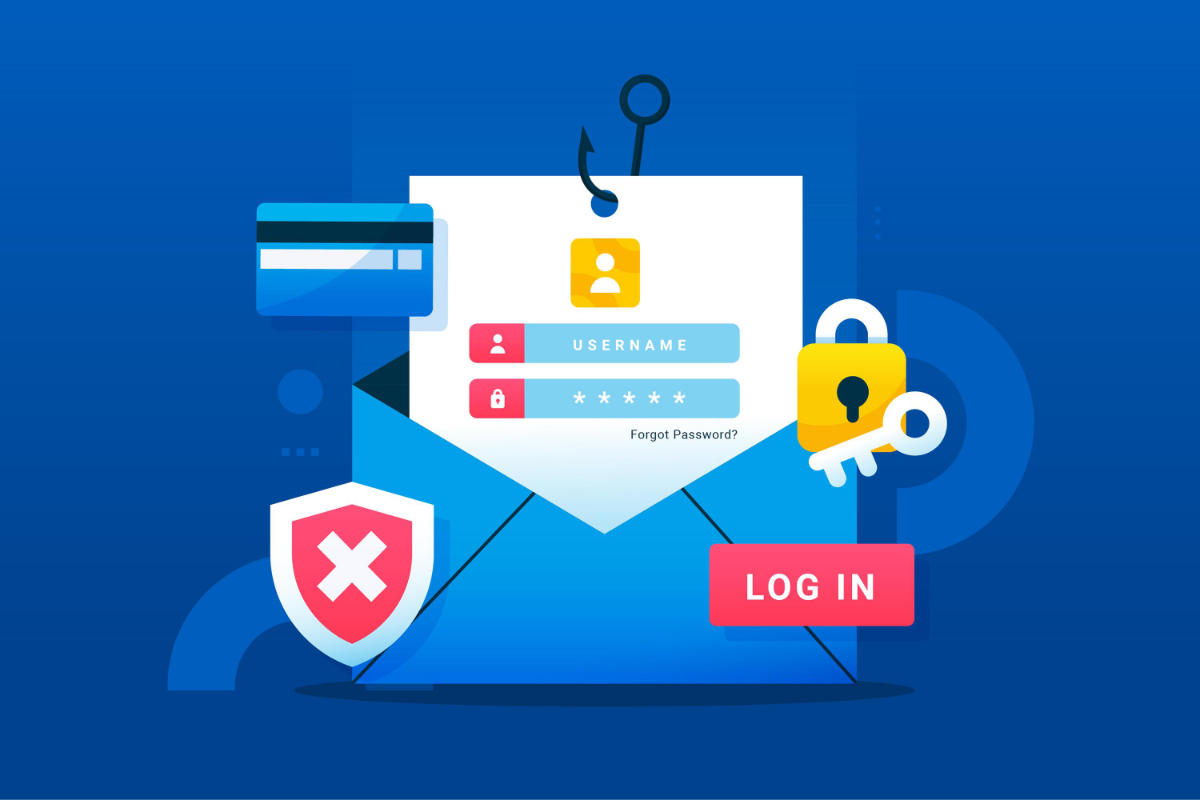
For businesses, a number of measures can be taken to mitigate both phishing and spear phishing attacks:
Two-factor authentication (2FA) is the most effective method of thwarting phishing attacks, as adds an extra layer of verification when accessing sensitive applications . 2FA is based on users having two things: something they know , like a password and username, and something they have with them , like their smartphone . Even when employees are compromised, 2FA prevents the use of their compromised credentials, as these alone are not enough to get in .
In addition to the use of 2FA, companies should apply strict password management policies . For example, employees should be required to change their passwords frequently and not be allowed to reuse a password for multiple applications .
Finally, educational campaigns can also help decrease the threat of phishing attacks by enforcing safe practices , such as not clicking on external links to emails. In this regard, I would like to mention the ethical phishing service of Cyberfero , which has the very intent of testing the company and organizing targeted training to mitigate the risks .
It’s not enough to know what phishing is, you also need to know how to recognize it.
Useful links:
Share


RSS
More Articles…
- From Cyberfero to Cyberfero: rebranding of the leading cybersecurity company
- NIS: what it is and how it protects cybersecurity
- Advanced persistent threats (APTs): what they are and how to defend yourself
- Penetration Testing and MFA: A Dual Strategy to Maximize Security
- Penetration Testing: Where to Strike to Protect Your IT Network
- Ransomware: a plague that brings companies and institutions to their knees. Should you pay the ransom? Here is the answer.
- Why IT audit and log management are important for Cybersecurity
- Red Team, Blue Team and Purple Team: what are the differences?
Categories …
- Backup as a Service (18)
- Acronis Cloud Backup (11)
- Veeam Cloud Connect (4)
- Cloud Conference (3)
- Cloud CRM (1)
- Cloud Server/VPS (22)
- Conferenza Cloud (4)
- Cyberfero (15)
- ICT Monitoring (5)
- Log Management (2)
- News (25)
- ownCloud (4)
- Privacy (7)
- Security (203)
- Cyber Threat Intelligence (CTI) (8)
- Deception (4)
- Ethical Phishing (11)
- Netwrix Auditor (2)
- Penetration Test (11)
- Posture Guard (3)
- SOCaaS (65)
- Vulnerabilities (84)
- Web Hosting (15)
Tags
 Unknown Feed
Full Disclosure
- [0day-rubbish] TRENDnet TV-IP302PI firmware 1.02.38 authenticated NTP server-address OS command injection to root command execution via a shell-form system() call (7.2 High, PR:H) October 20, 2026Posted by disclosure via Fulldisclosure on Oct 200day Rubbish Research Team is publicly disclosing a vulnerability in TRENDnet TV-IP302PI firmware 1.02.38, the closed-source IP surveillance camera from TRENDnet (United States). The camera's application daemon is shipped at /hunt/hunt_server: an ARM 32-bit EABI5 version 5TE soft-float binary, dynamically linked against /lib/ld-linux.so.3, 4.5 MB and stripped. Its […]
- [0day-rubbish] Royal Render 9.1.26b: default-unauthenticated job submission on rrServer TCP 7773 reaches worker-side shell execution as the worker identity, measured root (8.1 High) October 20, 2026Posted by disclosure via Fulldisclosure on Oct 200day Rubbish Research Team is publicly disclosing a vulnerability in Royal Render 9.1.26b, the closed-source render-farm job manager for VFX and animation studios from Binary Alchemy (proprietor Holger Schoenberger) of Ludwigsburg, Germany. Royal Render is a different product from the Royal Server gateway sold by Royal Apps GmbH […]
- [0day-rubbish] ProSoft Technology RLX-IFH24E v2.2.44 unsigned firmware upgrade package to root command execution and full account-database overwrite (7.2) October 20, 2026Posted by disclosure via Fulldisclosure on Oct 200day Rubbish Research Team is publicly disclosing a vulnerability in the ProSoft RLX-IFH24E, version v2.2.44, the industrial wireless radio from ProSoft Technology, Inc. (United States). The appliance is a closed-source embedded device and an OEM build of the MicroHard Systems IPx21 platform on the MHX-910 board design: an […]
- [0day-rubbish] Parasoft Continuous Testing Platform 10.7.5-SNAPSHOT anonymous deserialization in the database restore path to JSP command execution as uid=1000 (9.8) October 20, 2026Posted by disclosure via Fulldisclosure on Oct 200day Rubbish Research Team is publicly disclosing a vulnerability in Parasoft Continuous Testing Platform 10.7.5-SNAPSHOT, the closed-source commercial continuous-testing, service-virtualisation and environment-management product from Parasoft, a United States software-testing vendor headquartered in Monrovia, California. The affected component is the em web application inside the vendor's own container image, […]
- [0day-rubbish] Exasol Database 7.1.30 docker-db form: shipped default SYS credential to PYTHON3 UDF os.popen command execution as uid=500(exadefusr), output returned in-band (8.8) October 20, 2026Posted by disclosure via Fulldisclosure on Oct 200day Rubbish Research Team is publicly disclosing a vulnerability in Exasol Database 7.1.30, the in-memory MPP analytical database from Exasol AG (Germany), examined in its docker-db single-container deployment form. The SQL engine is a proprietary C implementation named EXASolution, the server process is exacts, clients speak a proprietary […]
- [0day-rubbish] Edimax BR-6478AC firmware v2.20 authenticated command injection in the setWAN WAN-configuration handler, root command execution (7.2) October 20, 2026Posted by disclosure via Fulldisclosure on Oct 200day Rubbish Research Team is publicly disclosing a vulnerability in the Edimax BR-6478AC, firmware image BR6478AC_v2.20.bin, the dual-band AC1750 SOHO wireless router from Edimax Technology Co., Ltd. (Taiwan). A single authenticated POST that looks like an ordinary WAN settings submission reaches system() with a request-controlled username interpolated unquoted […]
- [0day-rubbish] Edimax BR-6478AC firmware v2.20 authenticated command injection in the formWlanMP manufacturing-test handler, root command execution (7.2) October 20, 2026Posted by disclosure via Fulldisclosure on Oct 200day Rubbish Research Team is publicly disclosing a vulnerability in the Edimax BR-6478AC, firmware image BR6478AC_v2.20.bin, the dual-band AC1750 SOHO wireless router from Edimax Technology Co., Ltd. (Taiwan). A single authenticated POST to a manufacturing radio-calibration route that is still registered in production firmware reaches system() with thirty […]
- [ROOTEDCON] Call for Papers 2027 · RootedCON2027 (Madrid) October 20, 2026Posted by Román Ramírez on Oct 20-=] About RootedCON RootedCON is a technology and cybersecurity conference that will take place in Madrid (Spain) from March 4 to 6, 2027. This will be our XVII EDITION! With an attendance of between 9,000 and 10,000 people, it is the most relevant specialized conference in the country and […]
- VestaCP <= 0.9.8-26: authenticated config-parser eval sinks -> root RCE (VESTACP-2026-001) October 15, 2026Posted by Bryan Ramirez via Fulldisclosure on Oct 15Advisory ID: VESTACP-2026-001 / GHSA-m2mc-xwq7-pw72 Product: Vesta Control Panel (VestaCP) Versions:
- [SYSS-2026-080]: dcm4che - Path Traversal (CWE-22) October 15, 2026Posted by Matthias Deeg via Fulldisclosure on Oct 15Advisory ID: SYSS-2026-080 Product: dcm4che Manufacturer: J4Care Affected Version(s): 5.35.0 Tested Version(s): 5.35.0 Vulnerability Type: Improper Limitation of a Pathname to a Restricted Directory (CWE-22) Risk Level: High Solution Status: Open Manufacturer Notification: 2026-08-06 Public Disclosure: 2026-10-13 CVE Reference: Not yet...
Customers






Twitter FEED
Recent activity
-
SecureOnlineDesktop
Estimated reading time: 6 minutes L'impatto crescente delle minacce informatiche, su sistemi operativi privati op… https://t.co/FimxTS4o9G
-
SecureOnlineDesktop
Estimated reading time: 6 minutes The growing impact of cyber threats, on private or corporate operating systems… https://t.co/y6G6RYA9n1
-
SecureOnlineDesktop
Tempo di lettura stimato: 6 minuti Today we are talking about the CTI update of our services. Data security is… https://t.co/YAZkn7iFqa
-
SecureOnlineDesktop
Estimated reading time: 6 minutes Il tema della sicurezza delle informazioni è di grande attualità in questo peri… https://t.co/tfve5Kzr09
-
SecureOnlineDesktop
Estimated reading time: 6 minutes The issue of information security is very topical in this historical period ch… https://t.co/TP8gvdRcrF
Newsletter
Products and Solutions
Partners
Cloud Models
News
- From Cyberfero to Cyberfero: rebranding of the leading cybersecurity company May 6, 2024
- NIS: what it is and how it protects cybersecurity April 22, 2024
- Advanced persistent threats (APTs): what they are and how to defend yourself April 17, 2024
- Penetration Testing and MFA: A Dual Strategy to Maximize Security April 15, 2024
- Penetration Testing: Where to Strike to Protect Your IT Network March 25, 2024
Google Reviews









Ottima azienda, servizi molto utili, staff qualificato e competente. Raccomandata!read more
Ottimo supportoread more
E'... un piacere poter collaborare con realtà di questo tiporead more
Un ottimo fornitore.
Io personalmente ho parlato con l' Ing. Venuti, valore aggiunto indubbiamente.read more


About
© 2024 Cyberfero s.r.l. All Rights Reserved. Sede Legale: via Statuto 3 - 42121 Reggio Emilia (RE) – PEC [email protected] Cod. fiscale e P.IVA 03058120357 – R.E.A. 356650 Informativa Privacy - Certificazioni ISO